The first phase plays like a Souls run with seven strangers wandering through it. Then a ritual site opens and pulls everyone into the same courtyard. FromSoftware’s official guide just landed, so here’s how a Dusk Battle works – and how much of it you actually get to choose.
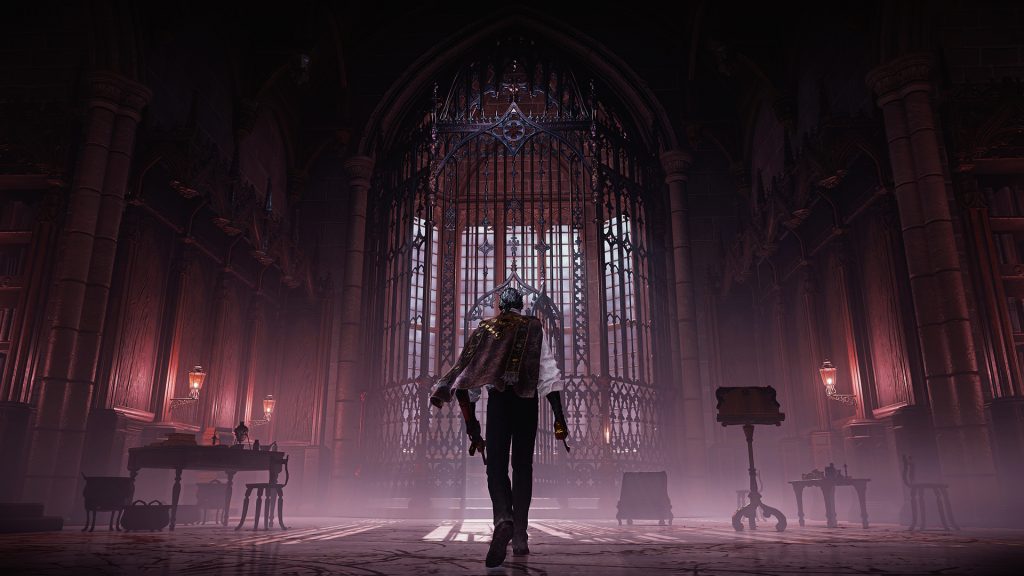
The Shape Of A Dusk Battle
A Dusk Battle runs across four phases. Eight Bloodsworn get summoned in, and the grail culls them as the phases progress until three remain for the final bestowal. Preview sessions clocked in between 30 and 40 minutes.
One rule changes how you read all of it. During the first three phases you can revive as many times as you like. Dying costs you time, not your run – only failing the cull removes you. That’s what gives the early phases their unhurried feel: you can pick a fight well above your level and find out the hard way without wrecking your match.
Survival comes down to Virtue, and only the highest scorers make it through the culls at the end of Phase II and Phase III. Two players go after Phase II and three more after Phase III, leaving the final trio.
Three Ways To Play It
You get to decide how much of this is a PvP game, and that’s deliberate. Miyazaki has said the team’s starting point was a system letting people compete without leaning on PvP skill at all.
Play it like a Souls run. Light lantern corpses, hunt great foes for Powers of Blood, sweep regions for items and rack up Bloodfang and Collector commendations. Four of the five Virtue types never require you to fight another Bloodsworn. Your Kin follows you the whole way, levelling as you go, which does a lot to make solo exploration feel less exposed.
Play it co-op. Petition someone for an alliance and neither of you can hurt the other, while you split Sword and Pledge Virtue between you. Trespasser fights invite everyone nearby to pile in. And if you want that permanently, Bloodbound Alliances pairs the whole lobby off from Phase I and holds those pacts through the finale, so you and your partner win or lose together.
Play it as a hunter. Grab a redstone, work the ritual sites, take the Sworn Enemy sigil and go find the person it names. Or switch matchmaking to No Alliances and remove the diplomacy entirely.
The catch is that you can’t abstain completely. Ritual sites pull everyone in, and walking out costs you health. You can stand at the edge claiming pillars while the middle turns into a knife fight, but you’re still in the room. And the last three standing always have to settle it.
Five Ways To Earn Virtue
Killing people is only one route to Virtue, and it only pays in specific places. That single constraint does a lot of work.
Repulsion Virtue comes from putting down great foes – tougher than standard enemies – and trespassers, which are a tier above that again. When a trespasser fight kicks off, nearby Bloodsworn get invited to pile in, and you can fight it together.
Flame Virtue comes from lighting the skulls of corpses seated on chairs around the map. They come in two sizes and the bigger ones pay more, but only the first person to light one gets anything. Every lantern is a race you might already have lost.
Sword Virtue and Pledge Virtue both live inside ritual sites, which appear partway through Phases II and III. Sword Virtue comes from beating other Bloodsworn, and you cannot earn it anywhere else on the map. Pledge Virtue comes from swearing at blood pledge pillars, and you lose it if someone overwrites your pledge. Walk out of a ritual site once you’re inside and you bleed HP for deserting.
Commendation Virtue pays at the end of each phase to whoever placed first or second in two categories. Bloodfang counts enemies defeated. Collector counts items found through exploration, weighted by rarity, with newly acquired items worth more – and enemy drops don’t count toward it at all. Miyazaki told press the scoring model owes something to Catan. A vampire battle royale with a Longest Road bonus. Of course it is.
The Redstone Gamble
Picture the position you’re in. Twelve minutes of careful work behind you, a levelled Kin at your shoulder, and the map has just funnelled all eight of you into one courtyard where leaving costs health. There’s a red plinth and a gold one. The red one makes killing people pay better. The gold one makes not killing people pay better. You get one.
Ritual sites hold rock plinths offering redstones and goldstones, and you can only hold one type at a time. A redstone boosts your Sword Virtue; a goldstone boosts your Pledge Virtue. Die carrying a redstone and you’ll need to go and fetch another, which isn’t always worth the detour depending on the clock and where you sit on the leaderboard.
Six Bloodsworn, All Unhinged
The network test ships with six: Albert, Bloodhand Jan, Trang Lanh, Sniper Layla, Senator Samir Patres, and Zork. Each carries fixed weapons, two Bloodsworn Skills and two Aspects – though FromSoftware notes skills and aspects become customisable in the release version.
Layla carries bronze katars and a sniper rifle, can dissolve into an insect swarm to reposition, and pulls a Gatling gun out of her own body; her Neb-ra Lineage aspect regenerates her HP up to half maximum but weakens her Goldblood Stakes in exchange. Zork wields a length of severed undersea cable, fires missiles from his diving suit, and can convert himself into a human rocket. His Law of the Deep Sea aspect steals maximum HP from defeated Bloodsworn – but the thief loses it if their victim kills them back.
You level up during the match by defeating enemies and players, raising HP and attack power, with some skills gated behind level thresholds.
Combat Has A Shield Now
All Bloodsworn can howl, sending out a gust of wind. Time it against an incoming attack and you interrupt it while heavily filling the enemy’s stagger gauge; it also deflects some ranged attacks. Fill that gauge completely and you can drink the target’s blood for heavy damage plus healing – and weaker enemies get spellbound by it, turning them into followers.
There’s also a generated shield that blocks frontal attacks and works mid-air, with guard counters on [R] straight after a block. Take enough hits and the shield breaks, leaving you wide open until it comes back.
The movement is where it stops feeling like a Souls game: no fall damage, up to three jumps, mid-air dashes, and stamina drained only by dodging rather than attacking. On top of that, you can warp to map locations at will, though not at phase start, not shortly after travelling or reviving, and not mid-fight.
Kin, Powers Of Blood, And Regional Features
Kin are allies you strike compacts with at summoning circles found beneath chains of light. Circles come in three types – Ring, Blade and Eye – each offering different kin, and the test build contains eight of them. They level alongside you as you kill things, gaining health, attack power, and sometimes new attacks.
Swapping late is usually a trap: a levelled kin you’re indifferent to tends to beat a fresh one you prefer but can’t raise in time.
Beating great foes and trespassers awards Powers of Blood, picked from two options each time, with a maximum of five active at once. The guide’s example screen offers a choice between gradual HP regeneration and a flat attack boost, with things like Stake Potency Up and Physical DEF Up already slotted – so you’re steering what your Bloodsworn is good at rather than chasing raw numbers before the ritual sites open.
Meanwhile each region cycles its features every phase – Bloodsacs dropping blood crystals for skill upgrades, Alchemy Forges for imbuing weapons with affinities, and small kin circles that dump experience into your partner. Since they rotate, the part of the map worth visiting changes every phase.
Two items worth grabbing: the Fire Flask, and the Memorial Stake, which you plant to set where you’ll respawn.
Alliances, Sigils And Rulesets
Alliances come with an expiry date. They hold across the first three phases, splitting ritual site Virtue between confederates, then dissolve the instant the final phase begins – so think twice before partnering with someone you know can out-fight you. GameRant reports that betraying an ally early penalises you and grants your former partner bonus HP.
Sigils assign you a personal objective involving a specific rival. Four ship in the test build: Sworn Enemy, Old Friend, Eye of Muralis, and Love Ephemeral – and some objectives are completed using emotes. Somewhere out there, someone is going to lose a match because they couldn’t bow fast enough.
Matchmaking offers three rulesets. Standard is the default. No Alliances removes them entirely. Bloodbound Alliances pairs every Bloodsworn from Phase I onward and, unlike ordinary alliances, holds that pact through the finale so both can win together – with friend invites planned for release.
Phases II and III can also throw events at you. One is Prowling Sword Lion – a Lodomerien zeppelin flying the sword lion crest, which you can call supporting fire down from. Another is a storm that picks players up and drops them somewhere else entirely.
The Moon Blood Bestowal
The three highest-Virtue Bloodsworn get called to the final battle. Each receives two lives, plus bonus HP determined by how much Virtue they accumulated earlier.
So the grind pays twice. Arrive with a fat Virtue total and you arrive tougher.
Does It Actually Work?
Worth noting what the people who played it came away with. GameRant’s reviewer spent two days with it and called it the studio’s most distinctive game to date. CGMagazine’s came away describing it as the most fun they’d had with a multiplayer game in years – and, more surprisingly, the first FromSoftware release they’d hand to a casual player without bracing them for the usual difficulty wall.
That last part is the interesting claim. A FromSoftware game you could recommend to someone who bounced off Elden Ring is not a thing that has existed before.
So Was Nightreign The Test Balloon?
I expected to answer yes. The structural rhyme is loud – fixed-kit characters, a build scavenged from whatever the map offers, timed escalating phases, boss-heavy middle, short sessions.
The evidence doesn’t cooperate. Miyazaki told IGN the back-to-back releases were coincidental, that The Duskbloods was simply something the team wanted to build, and that a long stretch of multiplayer work leaves him wanting to make something single-player again. The timeline argues the same way: The Duskbloods was announced in April 2025, weeks before Nightreign shipped. Parallel projects, not sequential ones.
What’s actually going on is messier than that, and more interesting for it. Miyazaki has said the starting point was a Virtue-style system letting players compete without needing PvP skill, plus space for unplanned drama. Nobody arrives at that by iterating on Nightreign. It’s a separate question that happened to get asked in the same building.
The Test Is Live Right Now
The network test runs 21 to 24 August across five sessions: Friday 12:00-16:00 CEST, Saturday 04:00-08:00 and 20:00-00:00, Sunday 12:00-16:00, and Monday 04:00-08:00. Switch 2 and an active Nintendo Switch Online membership required. No release date yet – the September 24 date that circulated was reportedly an error.
Four days, five sessions, one map. Whatever the full game turns out to be, this weekend is the only look anyone gets at it for a while.
Related documents:
Leave a Reply