
Phantom Blade Zero holds an 88 on Metacritic and a 91 on OpenCritic, and so far not a single critic has filed a negative review. For S-GAME’s first AAA game, that is a loud debut. Still, the scores hide a few real arguments. Let’s dig into them.
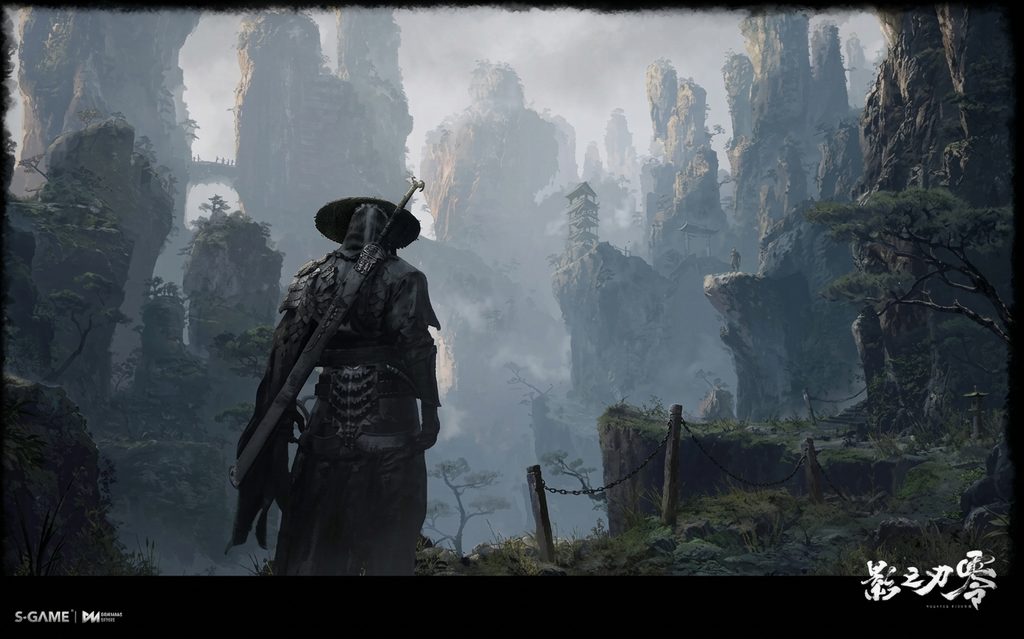
Those averages come from an early pool of around 30 reviews. Metacritic counts 30 of them as positive, one as mixed, and zero as negative, while OpenCritic shows every critic so far recommending the game. On Metacritic, the 88 also puts it ahead of this year’s other big action releases, with Nioh 3 at 86 and Onimusha: Way of the Sword at 85.
The top end is crowded. PCGamesN, TheGamer, and The Outerhaven all handed out perfect scores. GamesRadar+ gave it 4.5 out of 5 and called it a game of the year contender. The one low score comes from Eurogamer, which Metacritic logs as a 60. These are day-one numbers, so expect them to keep moving as more reviews come in.
The Combat Has Won Over Everyone
Every review we read praises the fighting, and critics keep comparing it to stepping into a martial arts film, and Donnie Yen’s work as combat consultant shows in the way Soul moves and in how the fights are choreographed. The Sixth Axis came away feeling like an action star every time a fight broke out.
The rules are simple to learn. There is no stamina bar to babysit. Attacks marked in red need a dodge, and attacks marked in blue can be parried and punished with a counter. You go in with two primary weapons, two Phantom Edges, a set of active abilities, and accessories that add passive bonuses. The weapon list runs from one-handed swords and spears to greatswords, bows, and rifles, and weapon upgrades can be reset whenever you like. Swapping to something new never costs you your investment.
Even Eurogamer, the harshest review in the pile, praised the animation and the sense of flow once the combat clicks.
Bosses Are the Main Event
Ask reviewers for the highlight and most of them point to the bosses. RPGamer ranks them among the best fights in any action RPG, and Insider Gaming calls boss encounters the place where the game really shines. Fextralife went further and said you’ve probably never seen boss fights like these in gaming.
Critics also keep bringing up the phase checkpoints. Bosses come in multiple phases, each with its own gimmick, and if you die in a later phase, you restart that phase instead of the whole fight. If you’ve ever replayed Malenia’s first phase forty times just to practice her second, you’ll see why critics name this as the reason the game feels fair.
Eurogamer is the dissenting voice here as well. Its review felt the boss fights dragged down the pace in the early hours.
A Metroidvania at Heart
PCGamesN makes the case that Phantom Blade Zero is a Metroidvania before it is anything else. Exploration, backtracking, hunting for keys, secret bosses, and paths that stay blocked until you come back better equipped all sit at the center of the design. GamesRadar+ adds that even with several large regions, it doesn’t really play like an open world. Blocked spots get marked on the map automatically and turn green once you own the Phantom Edge that opens them, so you never have to guess where to return.
The Swiss outlet games.ch was less taken with it and felt the environments were fairly linear and that some text passages ran too long. Fextralife burned out on exploration in the late game, mostly because of a steady stream of low-value loot.
Defeated enemies also stay dead, even after you die or rest at a checkpoint. Director Soulframe Liang has explained that he wants everything in the game to have value and doesn’t want players repeating the same content. Critics are split on whether that works. Some enjoy a world that stays cleared once you’ve earned it. Others say it leaves the map empty and takes away chances to practice.
The Story Splits the Room
GamesRadar+ lists inconsistent storytelling among its negatives, and Push Square felt the constant flashbacks and tedious collectibles worked against the fast pace of everything else. RPGamer liked the writing and the surprises along the way, but thought some later plot threads felt hurried and leaned too much on exposition. Eurogamer called the narrative pretty unremarkable.
On the other side, PCGamesN admits the game throws around terms that sound like nonsense at first, transcension and maskwalkers among them, but still found the story confident in its own originality. Several reviews also call the English dub stiff and recommend switching to the Chinese voice track with subtitles.
The Grunts Are the Weak Link
Bosses get near-universal love, but the ordinary enemies don’t. Insider Gaming names enemy repetition as one of the issues that kept the game from perfection, and Fextralife points to reused enemies in the back half. According to one review roundup, the most common complaints are shielded and armored foes slowing fights to a crawl, and basic mobs that feel like training dummies next to the bosses.
Difficulty and the Sixty-Six Days Mode
There are three regular difficulties, Wayfarer, Pathbreaker, and Hellwalker, and reviews say you can switch between them at any time. Dying costs you nothing. Fextralife saw that as a downside, saying the first run had very little tension because death carries no loss and cleared enemies stay gone.
In our preview we listed Sixty-Six Days as a fourth difficulty and left open what happens when the clock runs out. Now we know. It unlocks only after you finish the game on Pathbreaker or Hellwalker. Enemies fight at Hellwalker strength, every death costs Soul one of his 66 days, and the run is over when you reach zero. You also can’t save manually, since the game only saves at fixed checkpoints such as bells. Trophy hunters can relax, because the Platinum is possible in a single run on any difficulty, and no trophy is tied to Sixty-Six Days. Fextralife would have liked the mode available from the start.
Performance Depends on Where You Play
On PC, shaders compile on the first boot, and one review measured around 100 frames per second at 4K on high settings with DLSS Quality on an RTX 4080. Ray tracing is the most expensive setting, and traversal stutter shows up only rarely. Notebookcheck is less kind and reports stutter and frame rate drops on both PC and PS5. The PC version also ships with Denuvo.
On a base PS5, Performance mode sits at 60 frames per second most of the time but dips in the rainy Pangzhen region and in some boss fights, while Graphics mode struggles. The PS5 Pro gets three modes, and Insider Gaming ran into almost no technical problems on Pro hardware. GamesRadar+ called the pre-release build a little buggy, and S-GAME has reportedly promised a day-one patch.
On Steam Deck, testing found the game below 30 frames per second even at the lowest settings, averaging 23 to 27 in the Crimson Forest with drops close to 10, and the battery lasted around two to two and a half hours. That stings a little, since S-GAME said back in June that it was optimizing for low-end hardware and the Deck.
How Long It Lasts
Reviews put the main story at roughly 25 to 30 hours, and 40 to 50 if you take on most of the side content. The Outerhaven spent over 50 hours with optional bosses, side quests, and item hunting, and one Metacritic review describes a 55-hour adventure. Fextralife says the game turned out much longer than expected, with huge maps and plenty of bosses.
Phantom Blade Zero launches October 29 on PS5 and PC for $59.99. In the Americas, it unlocks the evening before, at 7 pm Pacific and 10 pm Eastern on October 28.
So, Should You Pick It Up?
If Elden Ring hooked you through its boss fights, the reviews make a strong case. One critic said the game gave them the same feeling Elden Ring did and ranked it above both Nioh 3 and Onimusha. Just don’t expect the Souls loop. You keep your currency when you die, and since cleared enemies stay dead, you never have to fight your way back to a boss.
For us, that’s where the Elden Ring comparison stops. Part of what makes a boss like Malenia stick is that every attempt costs you something, and you start each one at her first phase again. Phantom Blade Zero takes most of that pressure away. Sixty-Six Days brings some of it back, though not by making you replay fights, since you still pick up in the phase where you died. The pressure there comes from the cap, because every death counts against your 66, and that mode only opens up once you’ve finished the game.
The story is a coin flip, judging by the reviews. Steam Deck players should hold off for now, and on a base PS5 you’ll see some frame drops in the heavier areas. In our preview we couldn’t say whether the full game would hold up over its whole length. Going by the reviews, it does.
Sources:
Leave a Reply