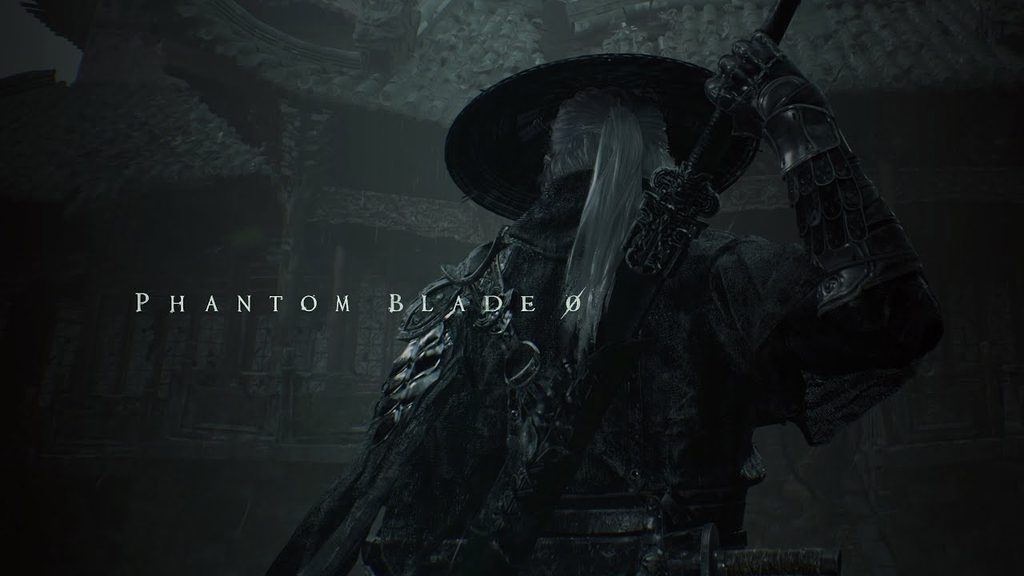
Phantom Blade Zero‘s director insists it is neither a Soulslike nor a traditional action game, and hands-on previews mostly back him up. The level design borrows from Souls, the parrying from Sekiro, and the combat runs much faster than both. Release is October 29.
Soulframe Liang, who runs the Beijing studio S-GAME and directs the game, has been making that point for two years now. His studio’s own label for the game is Kungfupunk, so it clearly would rather invent a category than join an existing one.
Why Everyone Guessed Soulslike
The early trailers showed a dark world, a dodge and a parry, and the genre label stuck without anyone thinking twice. Then combat demos showed a tempo far beyond anything FromSoftware makes, and the guess flipped to Devil May Cry or Ninja Gaiden. Liang dismisses that one too.
He does admit to borrowing from Souls, though only a little. Liang is a fan, and the team took the map philosophy, meaning layered areas with several routes to the same spot, secrets tucked into odd corners, and side stories. He describes his target as the dense, interconnected level design of the Souls games from before Elden Ring. Combat takes its cues from Devil May Cry 5, and the story’s mood comes from Resident Evil-style horror. Beyond the level design, he says, the similarities stop.
One hands-on writer put the difference in button terms. A Soulslike usually parks light and heavy attacks on the shoulder buttons, while here you chain combos on the face buttons, closer to a character-action game. Not every outlet has dropped the label, though. One still headlined its hands-on as a Souls-like with kung fu in it.
Sixty-Six Days to Live
You play Soul, once the most feared blade of the Order, an elite assassin guild. He is framed for killing the Order’s head, betrayed, and left for dead with a blade through the heart. A mysterious healer called the Flesh Sculptor saves him with an artificial heart, but the repair gives him only 66 days to live. A cure exists, and you have to find it somewhere in the corrupted underworld of the Wulin, the martial-arts world where the story plays out.
Donnie Yen has advised on the combat as creative consultant since 2023, and he also supplied face and motion capture for the character Mó Yuan. The game traces back to a solo RPG Maker project Liang built in 2010 called Rainblood.
Four Weapons, One Long Combo
Soul carries two primary weapons and two secondary tools called Phantom Edges, and you can swap between all four mid-fight. Swapping stretches your combos and breaks enemy guards, and one report says it also refills part of your Sha-Chi gauge.
The weapons get weird in the best way. The Drunken Sword Style has Soul stumbling and weaving as if he had lost control while it builds up drunken energy. Twin blades let one sword orbit you and slash on its own, and the Soft Snake Sword coils around incoming attacks to open up a clean hit. There are also iron fists for heavy blows, a Tiger Cannon for crowds, and a Flaming Mane that spits fire out of a giant mask.
On defense, you’ll be parrying a lot. Attacks marked with a blue flash are Brutal Moves, and parrying one earns you a heavy counter. Earlier builds also had red-marked Killer Moves, which you dodge instead, and a Sha-Chi gauge that works like stamina for you and your enemies. A skill tree handles your character’s growth, and upgrading a weapon unlocks new forms and techniques.
Several previews agree that button mashing won’t get you far. You’ll want to watch what the enemy is doing and answer it.
A Connected World, Not an Open One
The Phantom World is divided into eight hand-built regions. It isn’t an open world but a connected one that you uncover step by step, with a hand-drawn map to guide you. Expect bandit-infested valleys, a warehouse full of hanging puppets, looming towers, and lakes you cross by speedboat. Liang cites Metroidvania influence too, with tools that let you return to earlier areas and reach spots that were closed off before, so backtracking is part of the structure.
A lot of content is easy to miss. In a 2025 interview, Liang said a typical first run might show you only about 30 percent of the game.
Previewers also say it doesn’t feel like a boss rush. Regular enemies mostly go down fast, and the bosses carry the spotlight. They are huge and imposing like Elden Ring bosses, yet fought one-on-one in the human-versus-human way of Sekiro. That verdict comes from a preview covering only two chapters, so take it as a first impression.
Difficulty With a Clock Attached
There are four difficulty levels, called Wayfarer, Pathbreaker, Hellwalker and Sixty-Six Days. The studio designed each as its own experience instead of just inflating enemy health. Wayfarer is meant to make you feel like a kung fu master. On Hellwalker, bosses ditch fixed patterns and adapt to how you fight in real time. Sixty-Six Days uses the Hellwalker fights but puts Soul’s life clock into play, so each death costs a day.
What to Expect on Launch Day
Phantom Blade Zero launches October 29, 2026 on PS5 and PC (Steam and Epic Games Store) as a single-player game. It slid from its original September 9 date, and S-GAME says development is complete. In the US, the standard edition costs $59.99 and the Deluxe edition $69.99. No Xbox version has been announced, and some outlets report a 12-month PS5 console exclusivity window that S-GAME hasn’t commented on.
Interest is clearly high, though how high depends on who you ask. Analyst estimates put Steam pre-orders above 300,000 and wishlists at 1.6 million, while another analyst says the buzz falls short of what Black Myth: Wukong had at this point. The previews I found are positive, but there are no reviews yet, and every impression above comes from limited play sessions. Whether the whole game holds up over its full length, nobody outside S-GAME knows yet.
Elden Ring players should feel at home in the map design and the one-on-one boss fights, and they’ll need to get used to a much quicker pace.
Leave a Reply