
After years of slaying yokai and perfecting the art of the Ki Pulse, fans of Team Ninja’s brutally challenging action RPG series have something massive to look forward to. Nioh 3 arrives on February 6, 2026 for PlayStation 5 and PC via Steam, bringing with it the most significant evolution the franchise has ever seen.
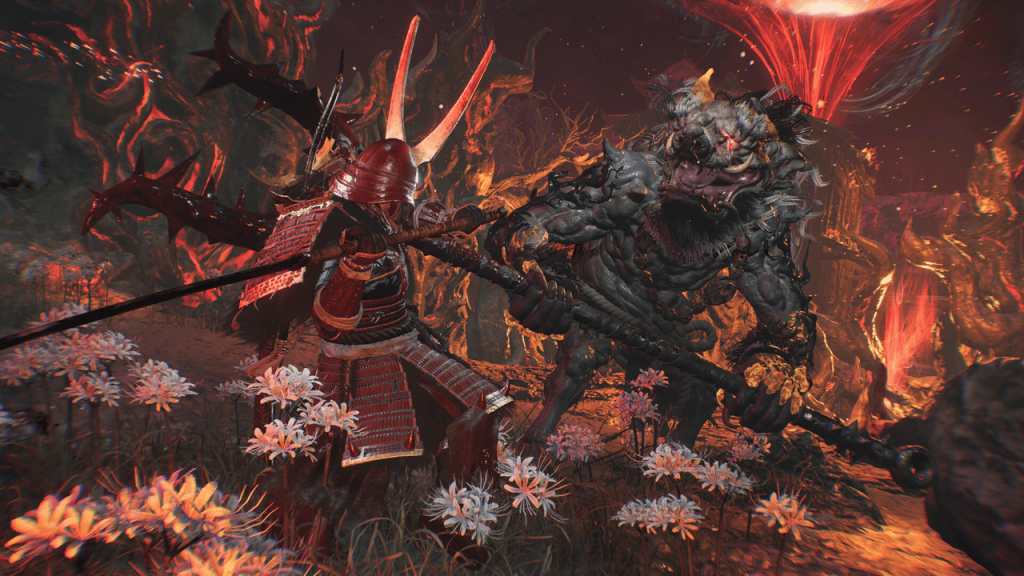
If you thought you’d mastered everything the series had to throw at you, think again—this sequel is completely reimagining what a Nioh game can be.
Two Sides of the Same Coin
The most radical departure from previous entries centers on the introduction of dual combat styles. Rather than simply offering different weapon choices, Nioh 3 lets you embody two distinct identities: the Samurai and the Ninja. Each style brings its own weapons, skills, progression trees, and even visual customization options that you can set independently during character creation.
The Samurai approach will feel like home to series veterans. This style maintains the traditional stance system that defined earlier games, letting you switch between high, mid, and low positions to alter your attack patterns and stamina consumption. Team Ninja has enhanced this familiar formula with new mechanics like Arts Proficiency—a gauge that fills as you land attacks and execute perfectly-timed deflections. When charged, it supercharges your offensive capabilities, reducing stamina costs and allowing you to chain devastating martial arts techniques together. The new Deflect ability rewards split-second timing, letting you parry incoming attacks at the last possible moment to create openings for counterattacks.
But here’s where things get interesting. The Ninja style completely abandons the stance system in favor of mobility and tactical cunning. Instead of the series’ signature Ki Pulse, Ninjas use Mist—a technique that leaves behind a shadow decoy while you dash to safety or reposition behind enemies for maximum damage. Your moveset becomes dramatically more vertical with double-jumps and aerial attacks that simply didn’t exist in previous games. Ninjutsu techniques like shurikens and the Footstool Jump (which staggers enemies while vaulting over them) round out an approach that’s all about speed, evasion, and opportunistic strikes.
The genius move? You can switch between these styles instantly during combat. Drain an enemy’s stamina as a Samurai, then shift to Ninja mode for a rapid combo finisher. Or use the agile Ninja to whittle down tough opponents before swapping to your Samurai loadout to deliver the killing blow. Since each style has separate equipment slots, you’re essentially managing two complete builds simultaneously—a level of tactical depth that makes previous entries look restrained by comparison.
Breaking Free From Linearity
Previous Nioh games guided you through carefully crafted but fairly linear stages. Nioh 3 throws that template out entirely. The game transitions to an open-field structure that preserves the series’ trademark tension while giving you unprecedented freedom to explore.
This isn’t a full open world in the Elden Ring sense, but rather expansive zones that connect multiple points of interest. You’ll discover enemy bases that need clearing, side quests from NPCs, and optional challenges scattered throughout the landscape. The practical impact is huge: stuck on a brutal boss? Just leave and explore elsewhere until you’ve found better gear or leveled up, then return when you’re ready. This creates a self-adjusting difficulty curve that lets you tackle challenges in your preferred order rather than bashing your head against a wall until something gives.
The Crucible system represents the game’s most intense challenge areas. These cursed zones are marked by black spikes erupting from the ground and glowing red barriers. Step inside and you’ll face enemies whose attacks inflict Life Corrosion—a nasty status effect that temporarily reduces your maximum health with every hit. The only way to restore it is by dealing damage yourself or defeating foes, creating a constant push-and-pull dynamic where aggressive play is rewarded but recklessness means death.
Crucibles accelerate your Amrita Gauge buildup, making it easier to activate your Living Artifact transformation when you need it most. You’ll also find Crucible Spikes—destroyable objects that raise your Spirit Force cap and unlock scaling bonuses based on how many you’ve destroyed. These areas gate story progression at certain points, serving as skill checks that ensure you’ve mastered the game’s systems before moving forward. Once you enter a Crucible, you’re locked in until you either purify it or find a Bodhisattva Statue (the Crucible equivalent of shrines) to fast travel from.
Time Travel and Historical Warfare
The narrative follows Tokugawa Takechiyo, grandson of the legendary Tokugawa Ieyasu, who’s poised to become the next Shogun during Japan’s tumultuous Sengoku period. When his younger brother Kunimatsu—consumed by resentment over the succession—allies with dark forces and leads a yokai army against him, the era of peace collapses into chaos.
Your guardian spirit Kusanagi grants Takechiyo the ability to transcend time itself. This isn’t just narrative window dressing—you’ll actually travel between different historical periods including the Sengoku, Edo, Heian, and Bakumatsu eras. Each period features distinct environments and introduces historical figures like Takeda Shingen, Minamoto no Yoshitsune, Hattori Hanzo, and Honda Tadakatsu. Your mission across these timelines involves purifying the mysterious Crucible Realm and preventing the corruption from spreading across all of Japan’s history.
The time-travel mechanics allow Team Ninja to showcase wildly different settings within a single game—from ancient Heian-period Kyoto to snow-covered Bakumatsu mountain settlements. It’s an ambitious framework that gives the game significantly more scope than either predecessor.
Arsenal Expansion
Both combat styles bring new weapons to the series. The Samurai can now equip Caestus—blunt fist weapons that deliver bone-crushing close-range punishment—along with firearms like rifles and gatling guns for ranged dominance. Traditional weapons like swords, odachi, and spears remain, but they’re enhanced by the new Arts Proficiency system.
The Ninja arsenal focuses on speed and versatility. Dual ninja swords enable rapid combo chains, while Talons (clawed fists) excel at aerial takedowns. The Kusarigama returns as a Ninja-exclusive weapon, and techniques like the Tailwind hatchet skill let you execute follow-up attacks to maintain relentless pressure. One-handed katanas offer swift approach options with stealth assassination capabilities when you catch enemies unaware.
Weapons remain style-locked—Ninjas can’t wield odachi, and Samurai can’t equip kusarigama—but this separation makes thematic sense and encourages you to develop distinct playstyles for each mode. The developers have hinted at DLC weapons down the line, following the series tradition of expanding the arsenal post-launch.
Learning From the Past
Team Ninja hasn’t just been making new games since Nioh 2—they’ve been learning. The studio’s experiments with Wo Long: Fallen Dynasty and Rise of the Ronin taught them valuable lessons about what works and what doesn’t. Jumping, introduced in Wo Long, makes its way into Nioh 3, adding verticality to exploration and combat. Guardian Spirit abilities now include traversal options, letting you clear gaps and destroy obstacles that would otherwise block your path.
The stat system has been streamlined to reduce unnecessary complexity, focusing your attention on meaningful build choices rather than overwhelming you with redundant attributes. Skill progression has been overhauled to support the dual-style system, with separate trees clearly indicating which abilities affect which weapons. You’ll acquire new techniques by finding Young Samurai Locks and Young Ninja Locks throughout the world, then customize your loadout based on your preferred approach to combat.
Enemy AI has evolved to apply pressure in more varied ways, forcing you to constantly adapt rather than memorizing patterns and executing them by rote. The game rewards mechanical understanding and real-time decision-making over exploitation of overpowered builds—though you can still create formidable character configurations if you invest the time.
PC Players Finally Get Respect
This might be the most shocking development of all. Team Ninja has been notorious for rough PC ports. Rise of the Ronin launched with stuttering and crashes. Wo Long struggled with inconsistent framerates. Even Nioh 2 faced optimization complaints that lingered long after release.
The Nioh 3 demo tells a completely different story. Early performance testing shows the game running smoothly on mid-range hardware—we’re talking consistent framerates on an RTX 3060 with 6GB of VRAM at 1080p. The game doesn’t suffer from the shader compilation stutters that plagued previous Team Ninja releases. Controls are properly implemented, graphics options are comprehensive, and support for DLSS 4, AMD FSR 3, and Intel XeSS 2 gives players flexibility to balance performance and visual quality.
The only technical issue noted in early testing involves camera panning judders when running at unlocked framerates, though this can be mitigated by locking to a specific framerate or using frame generation technology. For a studio that’s historically struggled with PC development, this represents a massive leap forward.
Playing Together
Online functionality carries over the cooperative modes that made previous games more approachable. The Summon Visitor feature lets you call in another player for assistance with challenging boss fights, while Expedition mode enables full co-op exploration of the open fields with up to three players total.
One limitation worth noting: cross-play isn’t supported between PlayStation 5 and PC. You’ll need friends on the same platform if you want to team up. The game does support both solo and online play in the demo, giving you the option to tackle challenges alone or with backup.
The developers have confirmed two post-launch DLC expansions are planned, with Digital Deluxe Edition purchasers getting access to both plus exclusive weapon sets and cosmetic items. Early purchase bonuses include armor sets themed after protagonists from previous games—William’s Youngblood Armor from Nioh and another set inspired by Nioh 2’s character.
Community Pulse Check
Reception to the alpha demo released in June 2025 was overwhelmingly positive. Team Ninja even published a feedback report detailing planned adjustments based on player surveys, demonstrating their continued commitment to iteration and improvement. The studio has a strong track record of refining their games through these early test periods, and community veterans have praised their responsiveness to constructive criticism.
Preview events held closer to launch have generated enthusiastic impressions, with journalists calling the style-switching system “a total game changer” and praising the game’s ability to blend Nioh’s traditional combat depth with fresh mechanics borrowed from Team Ninja’s work on Ninja Gaiden. Some concerns have been raised about potential overcomplexity—the dual-style system requires managing twice as many variables as previous games—but most hands-on impressions suggest the additional depth is worth the learning curve.
The January 29, 2026 demo gives everyone a chance to judge for themselves. Your progress transfers to the full game at launch, and completing the demo by February 15 unlocks the Twin-Snake Helmet for use in the main game. It’s a smart move that lets players test performance on their systems and get comfortable with the new mechanics before committing to a purchase.
Should You Get Your Hopes Up?
Nioh 3 represents Team Ninja’s most ambitious project in the series. The dual-style combat system fundamentally changes how you approach encounters. The shift to open-field exploration addresses one of the biggest complaints about previous games. The time-travel narrative framework allows for unprecedented variety in settings and characters. And somehow, despite all these additions, the core identity that made Nioh special—that precise, technical, punishingly rewarding combat—remains intact.
This won’t convert people who bounced off the series’ complexity or loot-heavy design. If you found previous games overwhelming, Nioh 3 doubles down on those elements rather than simplifying them. But for fans who’ve been craving more depth, more options, and more reasons to master the intricate systems Team Ninja builds, this looks like everything you could hope for.
The PC port situation alone represents a minor miracle. After years of subpar releases, Team Ninja finally seems to understand that PC players deserve the same level of polish as console audiences. Combined with the gameplay innovations, this could be the definitive Nioh experience.
One week from now, you’ll be able to judge whether Team Ninja has delivered on this ambitious vision. For now, the signs point toward a sequel that respects what came before while pushing the series into bold new territory. If you’ve been waiting for an excuse to return to yokai-slaying action, or if you’ve been curious about what makes Nioh special but were intimidated by its reputation, this might be your moment.
The Crucible awaits. Will you conquer it?
Stay tuned for more Nioh 3 coverage as we dive deeper into boss strategies, and hidden mechanics once the game officially launches – well, at least that’s the plan…
Leave a Reply