
… And What It’s Actually Doing to You!
Right now, as you read this, somewhere around 27,000 people are logged into Elden Ring on Steam alone. Not at launch. Not during a sale. Just on a regular Tuesday in 2026, four years after the game came out.
That number stopped me when I first saw it. Most games bleed players fast – a launch spike, a steady drop, a long tail that eventually flatlines. Elden Ring doesn’t follow that curve. It just keeps going.
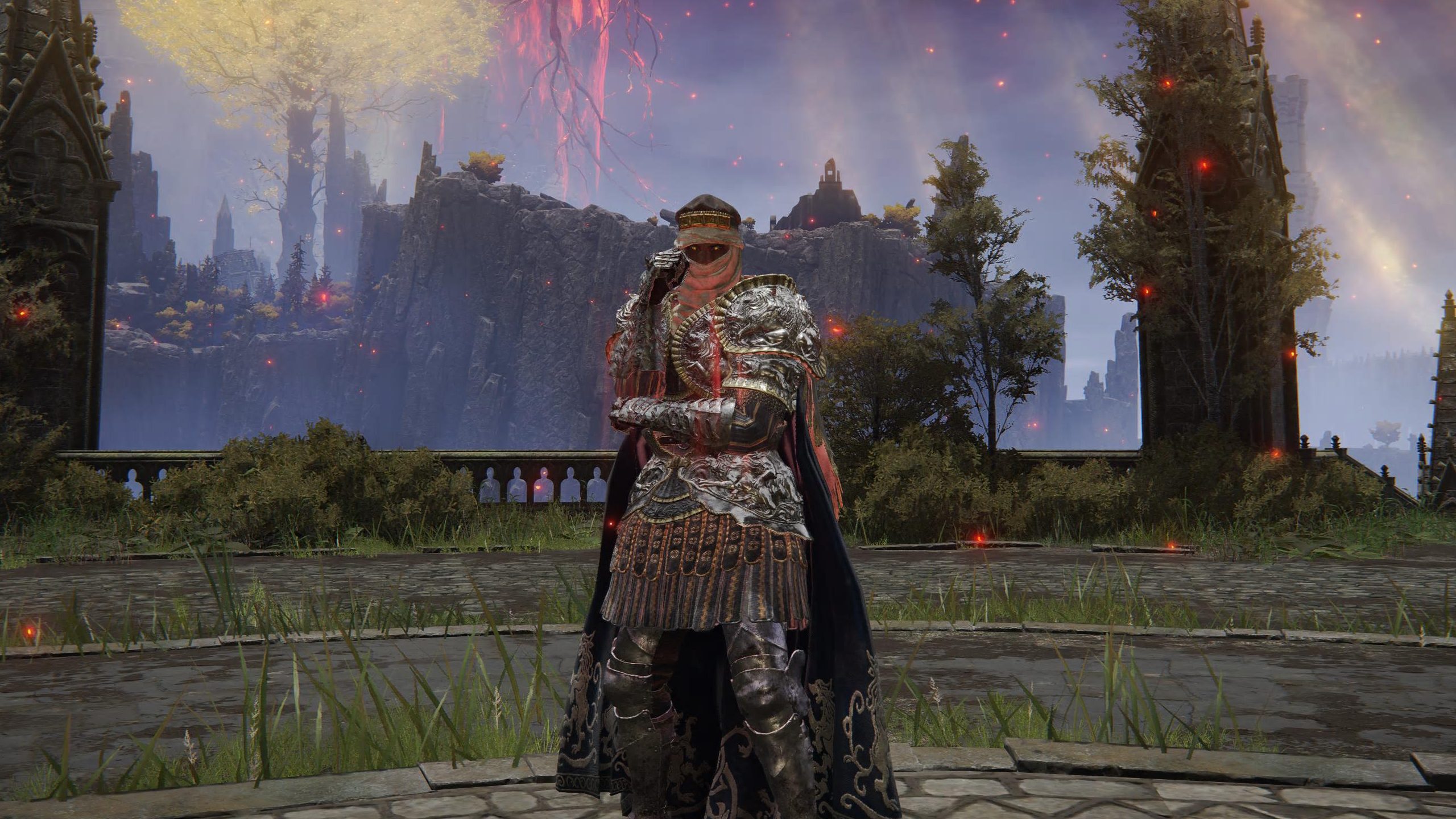
If you ask most people why, you’ll get a few standard answers: the world is beautiful, the lore is deep, the combat is satisfying when it clicks. And those things are true. But I don’t think they explain what’s actually happening. I’ve been playing this game since 2024, and I’ve been writing on this blog about what it’s taught me beyond the controller. The longer I sit with it, the more I think the real reason people are still here has almost nothing to do with the game itself.
It has to do with what the game does to you.
The Numbers Don’t Lie
Let’s start with what we can measure, because the numbers are genuinely strange.
Elden Ring has sold over 30 million copies since February 2022 – and it’s still selling. The Shadow of the Erdtree expansion, released two years after the base game, sold 10 million copies with a 30% attach rate. That means nearly one in three people who owned the game went back and bought more of it, years later. For comparison, that attach rate rivals the DLC for The Witcher 3 and Cyberpunk 2077 – two games with devoted fanbases and years of post-launch support.
But sales tell you people bought the game. What’s more interesting is what they did with it.
More than 45% of Elden Ring players on Steam have logged over 100 hours. Nearly 700,000 players across Steam and PlayStation have crossed 500 hours. And over 10% of the player base on both platforms has earned every single achievement in the game – a number that reflects not just time invested, but intention. These aren’t people who turned it on and walked away. They went back, repeatedly, until they’d seen everything.
When analysts compared long-term engagement across Elden Ring, Baldur’s Gate 3, and Diablo 4, Elden Ring led the 100-to-500-hour bracket by a significant margin. Those are games with enormous player bases, rich content, and active development. Elden Ring – a single-player game with no battle pass, no seasonal content, no live updates keeping the loop fresh – was outpacing them.
That’s not a popularity story – that’s something that demands an explanation. And it points directly at a question worth asking: what is it about this game that keeps pulling people back in?
Why Hard – On Purpose
The easy answer is: it’s just a really good game. Great art direction, deep world-building, tight combat. But plenty of games have those things and don’t hold players for 500 hours four years later. So let’s look at the one thing Elden Ring has that almost no other mainstream game will touch: it refuses to make itself easier for you.
There’s no difficulty slider in Elden Ring. There never has been. And when Hidetaka Miyazaki, the game’s director, was asked why – point blank, by journalists who framed it as an accessibility issue – he didn’t hedge. “Turning down difficulty would strip the game of that joy,” he said. “Which, in my eyes, would break the game itself.”
That’s not a PR answer. That’s a design statement.
Miyazaki has been consistent about this across years of interviews. The goal was never to punish players. “We don’t try to force difficulty or make things hard for the sake of it,” he said. “We want players to use their cunning, study the game, memorise what’s happening, and learn from their mistakes.” The difficulty isn’t the obstacle to the experience. It *is* the experience.
There’s a useful distinction here between two kinds of hard. One is *uncooperativeness* – arbitrary, inconsistent, punishing without logic. The other is *resistance* – a consistent set of rules that rewards you for learning them. Elden Ring is the second kind. Its enemies telegraph their moves. Its bosses are beatable by anyone willing to study them. Death always teaches you something, if you’re paying attention. Miyazaki has described it as a feedback loop: “We try to provide a learning curve so that the player can learn lessons for the next attempt.”
This is the key thing. The game isn’t hard because FromSoftware couldn’t be bothered to add an easy mode. It’s hard because the hardness is load-bearing. Remove it and you don’t get a friendlier version of the same experience – you get a different game with a different value. The achievement that comes from finally beating Malenia after fifty-seven attempts means nothing in a world where you could have turned down the damage and walked through her in five.
So the difficulty is intentional. But that still doesn’t explain why it keeps people playing for years. For that, you have to look at what the loop is actually training.
What the Loop Actually Trains
Think about what happens when you die in Elden Ring – really think about it, step by step.
You attempt something. You fail. In the moment of failure, if you’re paying attention, you learn something: you opened up too early, you didn’t dodge in the right direction, you ran out of stamina because you were panicking. You respawn, walk back, and try again – this time with that information. You fail again, learn something else. Eventually, something that felt impossible starts to feel manageable. And then, one run, it clicks.
That sequence – attempt, fail, understand, adjust, retry – is a loop. And Elden Ring is built to put you through it thousands of times.
Psychologists have a name for the sweet spot this creates: the zone of proximal development – the gap between what you can do and what you can almost do. It’s where real learning happens, not in the comfortable middle where things are easy, and not at the outer edge where things are impossible. Game researchers have found that well-designed games hold players in that gap deliberately. Elden Ring keeps you there, relentlessly.
But here’s the part that matters beyond game theory. The loop doesn’t just teach you to play Elden Ring. It trains a specific relationship with difficulty itself.
When you die to the same boss for the fifteenth time, you have a choice about how to hold that. You can read it as evidence that you’re failing, that the game is unfair, that you should quit. Or you can read it as information: there’s something here you haven’t understood yet. The game’s design – its consistency, its fairness, its refusal to apologise – pushes you toward the second reading. Not by telling you. By making it the only frame that leads to progress.
Research on resilience backs this up. Studies on challenging video games have found that repeated exposure to frustration – in a structured environment where the rules are consistent and success is possible – builds what psychologists call frustration tolerance: the capacity to stay with a difficult situation rather than flee it. Gradually increasing challenge trains the emotional muscles for dealing with setbacks, not just the cognitive skills for solving puzzles.
What Elden Ring gives you, over hundreds of hours, is practice. Not practice at parrying attacks. Practice at sitting with the feeling of not being good enough yet, and not letting that feeling be the end of the story.
It Doesn’t Stay in the Game
I want to tell you about a moment that had nothing to do with Elden Ring.
A few months into playing it seriously, I was working on something outside the game – a project that kept failing in ways I didn’t fully understand. I’d try an approach, it wouldn’t work, and I’d feel that familiar pull: this is too hard, maybe I’m not cut out for this, maybe I should find something else. The usual spiral.
And then I noticed something different happening. Instead of following that spiral, I found myself doing something I’d been doing in the game for months: pausing, asking what had actually just happened, and looking for what I could learn from the failure rather than what the failure said about me. Not because I decided to be more resilient. Because the reflex was already there – I’d built it somewhere.
I can’t run a controlled trial on my own psychology. But the research points in the same direction. A 2023 study on adult MMORPG players found a positive correlation between gaming time and resilience – and crucially, the researchers noted that the skills being transferred weren’t game-specific. Adaptability, perseverance, the ability to revise your approach when something isn’t working: these are patterns that move. In an eight-week study at the University of Glasgow, students who played commercial video games showed significantly greater gains in adaptability and resourcefulness than a control group – measurable, real-world shifts from doing something that looked, from the outside, like playing.
Here’s what’s actually happening. When you practice a response to frustration – any frustration, in any context – you’re building a pattern. The pattern doesn’t know whether the obstacle is a Souls boss or a conversation that isn’t going the way you needed it to. It just activates. What the game provides is a very specific kind of repetition: high-stakes enough to feel real, low-stakes enough that you can afford to fail and try again without lasting consequences. That’s a rare combination outside of games.
This is why, when someone who doesn’t play asks me what I got out of hundreds of hours in the Lands Between, I don’t lead with the story or the world or the combat. I say: I got better at being stuck. Not comfortable with it – I’m still not comfortable with it. But better. And I think a lot of people who’ve put serious time into this game know what I mean, even if they haven’t framed it that way.
You don’t stay in the game. But some of what you built there comes with you.
Conclusion
So here’s why people are still playing Elden Ring four years later.
Not because the game is beautiful – though it is. Not because the lore is rich – though it is. But because it puts you through a loop that trains something real, and once you’ve felt that, you keep coming back for more of it. Mastery in the Lands Between doesn’t feel like finishing a game. It feels like becoming someone who finishes difficult things.
If you’re a player who has spent serious time with this game, I’d invite you to look at what you’ve actually been building. Not your build – your character. The version of you that sits with a hard situation longer than you used to. The version that reads failure as information rather than verdict. That didn’t come from nowhere.
And if you’ve never played – if you picked up this article from the growth side of things and Elden Ring is just a name you’ve seen – the question the game poses is one you’re already living: what are you practicing when you face something hard? Are you building the reflex to push through, to learn, to try again? Or are you building the reflex to back away?
The game is one way to practice. It isn’t the only way. But it turns out it’s a surprisingly good one.
May your path be guided by grace.
Leave a Reply