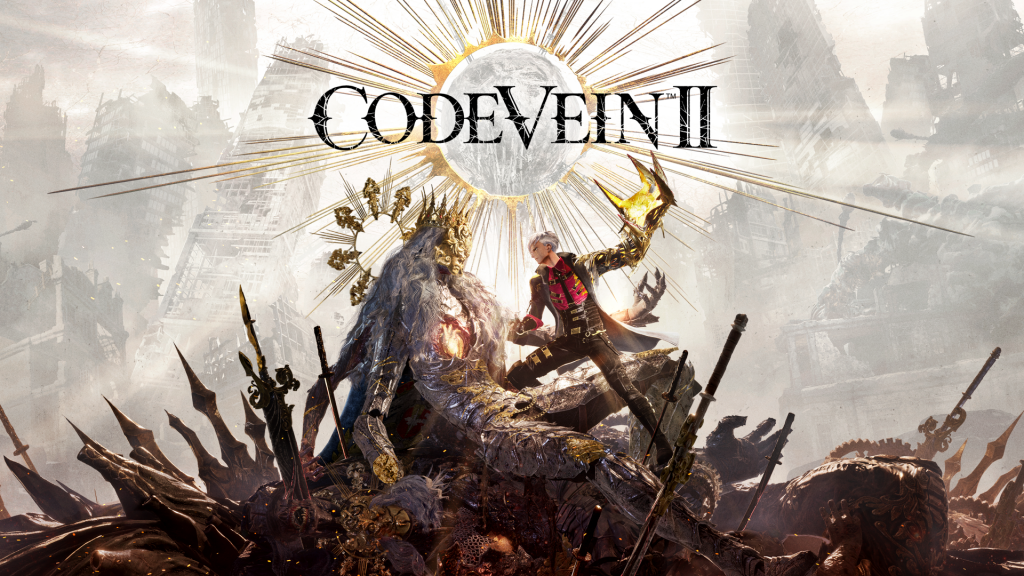
Bandai Namco’s vampire-themed action RPG is making a comeback, and it’s bringing some bold changes with it. After the original Code Vein carved out its niche in 2019 as the “anime Soulslike,” the sequel arrives on January 30, 2026, for PlayStation 5, Xbox Series X/S, and PC.
But if you’re expecting a direct continuation of that first adventure, prepare for a surprise – this one’s taking a different road entirely…
A Clean Slate for a New Era
Here’s where things get interesting: Code Vein II isn’t picking up where the first game left off. Instead, you’re getting a completely standalone story set in an entirely different world. No prior knowledge required, which means newcomers can jump right in without feeling lost.
The setup revolves around a catastrophic event called The Resurgence that occurred a century ago. Back then, Revenants – those vampire-like undead warriors you might remember from the first game – tried to seal away this devastating phenomenon that transforms living beings into mindless creatures known as Horrors. Fast forward to the present, and a new threat has emerged: the Luna Rapacis, which has corrupted many Revenants and turned them into the very Horrors they once fought against.
This is where you come in. Unlike the first game where you played as a Revenant, you’re now taking on the role of a Revenant Hunter – someone who opposes these corrupted beings. Your journey begins after a mission goes fatally wrong, but you’re resurrected by Lou MagMell, a mysterious Revenant girl with an extraordinary ability: she can travel through time.
That time-manipulation mechanic becomes the game’s central hook. You’ll jump between the present day and events from 100 years in the past, making choices that directly impact what happens in your current timeline. The development team chose this approach specifically to give players more agency over the story, allowing them to shape events by intervening at critical moments in history. It also explains why this isn’t a direct sequel – messing with established timelines would mean rewriting the original game’s events, which wouldn’t be fair to those who experienced that story.
Combat Gets a Major Overhaul
If you played the first Code Vein, you’ll recognize some familiar systems, but they’ve all been refined and expanded. The signature blood-draining combat returns, but it’s been given a significant upgrade.
The Drain Attack system remains central to gameplay – you’ll still transform your arm into a monstrous claw to siphon Ichor (the game’s resource for special abilities) from enemies. However, the new Jail equipment system replaces the original’s Blood Veils, offering more variety in how you execute these attacks. Different Jails provide unique drain animations and tactical advantages, allowing you to customize your approach based on the situation.
What really sets the combat apart this time is the Formae system. These powerful abilities come in three distinct categories. Weapon Formae modify your weapon attacks and provide buffs, letting you enhance your arsenal on the fly. Bequeathed Formae summon massive, unique weapons for devastating finishing strikes – think of conjuring a greatsword twice your size for one crushing blow. Defensive Formae give you options for blocking, countering, or executing special evasive maneuvers.
Blood Codes – the game’s class system equivalent – return with a game-changing twist. Previously, you’d commit to one Code per battle. Now, you can swap between them mid-combat. This opens up tactical possibilities that simply didn’t exist before. You might start a boss fight with a defensive Code to learn attack patterns, then switch to an offensive setup once you’ve figured out the rhythm. The system rewards adaptation and experimentation rather than forcing you to restart if your initial build choice doesn’t work out.
The weapon roster has expanded too. Returning favorites like Bayonets, Halberds, Hammers, and Greatswords are joined by two newcomers: Twin Blades and Rune Blades. Twin Blades prioritize speed and spinning attacks – perfect for racking up hit combos, which matters more now since wound stacking directly affects how much Ichor you gain from Drain Attacks. The Rune Blade takes a more mystical approach, using Formae power to levitate swords that can attack independently from you, enabling coordinated solo assaults that feel almost like having a second fighter on your side.
Your Partner in (Literal) Crime
The Partner system has received one of the most substantial reworks. Six AI companions will journey with you throughout the game: Lou, Josée, Lyle, Holly, Noah, and Valentin. Each brings distinct abilities and playstyles to the table.
The system now operates in two modes. Summoning mode keeps your partner fighting independently alongside you, providing support and drawing enemy attention away. They’ll launch their own attacks, perform their own Drain Attacks that share Ichor with you, and generally act as a second combatant on the battlefield.
Assimilation mode, on the other hand, merges your partner directly with you. They vanish from the battlefield, but you gain enhanced stats and special abilities based on who you’ve assimilated. Each partner also provides unique Link Traits—passive bonuses that influence your build. Holly, for instance, increases Formae activation speed, making her ideal for magic-focused builds. Noah boosts maximum Stamina, perfect for aggressive playstyles that demand constant dodging and attacking.
There’s also the Restorative Offering mechanic. When you fall in battle, your partner can revive you with recovered health. However, this puts them on cooldown, temporarily removing them from combat. It’s a safety net, but not an unlimited one – you’ll need to use it strategically rather than treating it as a get-out-of-jail-free card.
One significant change worth noting: multiplayer co-op has been removed. The first game featured online cooperative play, which has disappointed some returning players. However, the development team has refocused entirely on creating a refined single-player experience with improved AI partner behavior and better combat balance. Whether this trade-off proves worthwhile will depend largely on how well those enhanced systems perform in the final release.
Exploring a World in Two Timelines
Code Vein II makes a significant departure from its predecessor’s corridor-heavy design. The sequel embraces a semi-open world structure, with larger areas connected by your trusty Motorcycle Forma – a magical vehicle that serves as your primary means of transportation across the sprawling post-apocalyptic landscape.
Verticality plays a much bigger role in level design this time around. You’ll encounter multi-level combat arenas where positioning matters, environmental hazards that can be used to your advantage, and layered traversal routes that encourage exploration. You might lure enemies into traps by exploiting height differences, or gain tactical advantages by attacking from elevated positions. The expanded movement options – including improved sprinting, jumping, and wall-scaling – support this more dynamic approach to navigation.
The world spans multiple distinct regions, each with its own atmosphere. You’ll traverse the flooded ruins of the Sunken City, navigate the eerie Undead Forest, explore the desolate Corroded Scar, and visit the isolated MagMell Island, among other locations. The time-travel mechanic adds another layer to exploration—certain areas exist in both the past and present, with environmental changes between eras unlocking new paths and revealing different routes when you return.
Dungeons have received special attention, with the development team emphasizing more varied and substantial underground areas compared to the first game’s linear approach. The preview build showcased the Sunken Pylon, a submerged ruin where you must navigate polluted waters while solving the mystery behind the contamination.
Technical and Visual Polish
One area where Code Vein drew criticism was its visual presentation. While the anime art style had its fans, the overall graphical fidelity sometimes fell short, which occasionally impacted combat readability. The sequel addresses these concerns head-on.
Sharper textures and improved detail work make character silhouettes cleaner and visual effects more distinct. This isn’t just about prettier graphics – it directly affects gameplay. When you can clearly read an enemy’s telegraph or quickly identify which attack animation they’re winding up, combat becomes more responsive and fair. The enhanced presentation helps you make split-second decisions based on what you’re seeing rather than guessing.
Animation quality has also seen substantial upgrades. Every weapon type has been rebuilt from the ground up with more deliberate, weighty movements. Attack animations flow more naturally, enemy telegraphs are clearer, and the overall combat rhythm feels tighter. The development team specifically emphasized that they wanted encounters to reward precision and timing rather than devolving into button-mashing trades of blows.
The targeting system – a frequent complaint in the original – has been refined with better auto-targeting behavior and improved camera work. When you defeat an enemy, the camera now reliably tracks to your next target without the sluggish, sticky behavior that plagued the first game.
Creating Your Perfect Revenant Hunter
Character customization was already robust in the original Code Vein, but the sequel takes it even further. The expanded creator now offers adjustable body types, more hair options with detailed control over elements like bang length and curl degree, broader gradient selections for colors, and an extensive array of accessories and makeup options.
A free Character Creator Demo launched on January 23, giving you the chance to spend as much time as you want perfecting your protagonist before the game even releases. Any character you create in the demo transfers directly into the full game, so you can jump straight into the action when January 30 rolls around.
What the Previews Are Saying
Hands-on impressions from preview events have been notably positive, especially from those who found the original Code Vein flawed but promising. Several outlets specifically mentioned that the sequel feels more confident in its identity, building on the foundation while addressing many of the criticisms leveled at the first game.
The emotional storytelling has earned particular praise. Unlike many Soulslike games that rely heavily on environmental storytelling and obscure lore, Code Vein II takes a more direct approach with its narrative. Preview attendees highlighted the strong character development and the weight of the time-travel premise – the idea of confronting heroes-turned-monsters who may have only become such because of your own temporal interference.
Combat improvements received consistent acclaim. The enhanced build flexibility, clearer enemy telegraphs, and the strategic depth of the Partner system all contributed to a more engaging experience. One preview noted that the game encourages intelligent tool usage at the right moments rather than simply repeating light and heavy attack patterns.
However, not everything has been universally embraced. The decision to tell a completely standalone story has sparked debate among fans of the original. Some appreciate the accessibility for newcomers and the freedom it gives the developers to explore new ideas. Others feel disappointed that they won’t see what happened to the characters and world they became invested in. There’s particular frustration among those who hoped to see the connection to the God Eater series – which was revealed as part of the first game’s universe – explored further.
The removal of online co-op remains a contentious point. While some players primarily experienced the first game solo and won’t miss the feature, others valued the cooperative element. The development team has justified the decision by pointing to their focus on creating the strongest possible single-player experience with better AI and more refined balance.
Editions and Pre-Order Bonuses
Code Vein II comes in three editions. The Standard Edition includes the base game. The Deluxe Edition adds a Custom Outfit Pack with three costume sets and one weapon, plus the Mask of Idris expansion DLC scheduled for January 2027, and grants 72 hours of early access. The Ultimate Edition includes everything from the Deluxe plus a CODE VEIN Character Costume Set with six costumes based on characters from the original game, and a Digital Mini Artbook and Soundtrack.
All pre-orders receive the Stylized Forma Set, which includes a Forma Face Paint cosmetic item and the Twin Fangs of the Lone Wolf weapon—twin blades that feature a powerful lunging slice attack.
Should You Be Excited?
Code Vein II represents an ambitious evolution of its predecessor. The semi-open world structure, enhanced combat systems, meaningful partner mechanics, and time-manipulation narrative all point toward a more refined and confident experience. The decision to tell a fresh story removes barriers for newcomers while potentially alienating fans who wanted closure on the original’s plotlines.
What’s particularly compelling is how the game seems to have learned from both its own predecessor and the wider Soulslike landscape. The influence of Elden Ring’s approach to open-world design is evident, but Code Vein II maintains its own identity through its anime aesthetic, character-driven storytelling, and unique mechanical twists like the Jail system and Formae abilities.
The real question is whether the improvements address the first game’s weaknesses while preserving what made it special. Preview impressions suggest the developers have struck a promising balance, but the full experience will ultimately determine if Code Vein II successfully carves out its place in the increasingly crowded Soulslike genre.
With the Character Creator Demo arriving on January 23 and the full game launching just a week later on January 30, 2026, you won’t have to wait long to find out if this anime-infused vampire tale lives up to its potential. Whether you’re a returning fan curious about the changes or a newcomer intrigued by the premise, Code Vein II is positioning itself as one of early 2026’s most interesting action RPG releases.
Leave a Reply